How Your HVAC System Actually Works
An air conditioner does not create cold air. It moves heat from inside your house to outside of it, over and over, using refrigerant as the carrier. Here is that loop step by step, and what each component in a typical Arizona home is doing along the way.

One Loop, Six Steps
Your thermostat calls for cooling
When the indoor temperature drifts above your setpoint, the thermostat closes a circuit and signals the system to start. Everything that follows is one continuous loop that runs until the house reaches temperature again.
Hover or tap a step to read it
What's In a Typical Arizona Home
Most homes here run a split system: an outdoor condenser paired with an indoor air handler, often in the attic, tied together by refrigerant lines and a duct network. Newer and all-electric homes increasingly use heat pumps, which run this same loop in reverse during the cooler months to provide heat.
Outdoor condenser unit
The metal box beside the house. Contains the compressor, condenser coil, and fan — the part that actually moves heat out of your home.
Keep two feet of clear space around it. Blocked airflow or a coil packed with dust makes the compressor work harder and shortens its life.
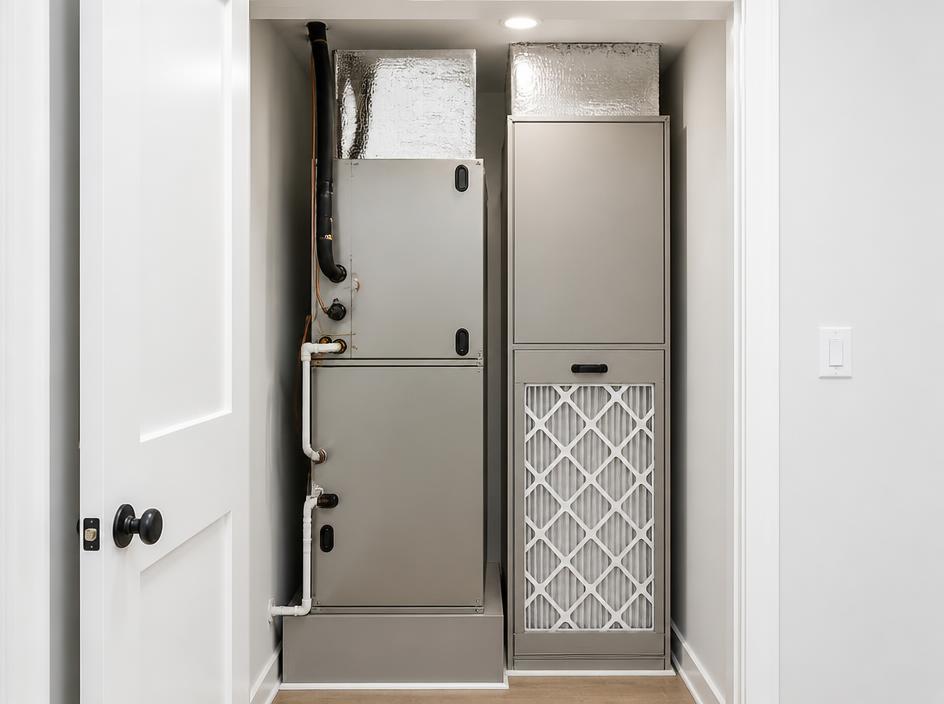
Air handler or furnace
Houses the blower motor and the evaporator coil. In Arizona this is usually an air handler in the attic; homes with gas heat use a furnace cabinet instead.
Attic installs run in extreme summer heat, which is hard on the equipment and on any ductwork sharing that space.
Evaporator coil
The indoor coil where refrigerant absorbs heat and pulls moisture out of the air.
A dirty coil or a clogged filter can cause it to freeze into a block of ice, killing airflow and stressing the compressor.
Refrigerant lines
The insulated copper lines connecting indoor and outdoor equipment, carrying refrigerant in a closed loop.
Refrigerant is not consumed. If a system is low, there is a leak — topping it off every season is treating a symptom.
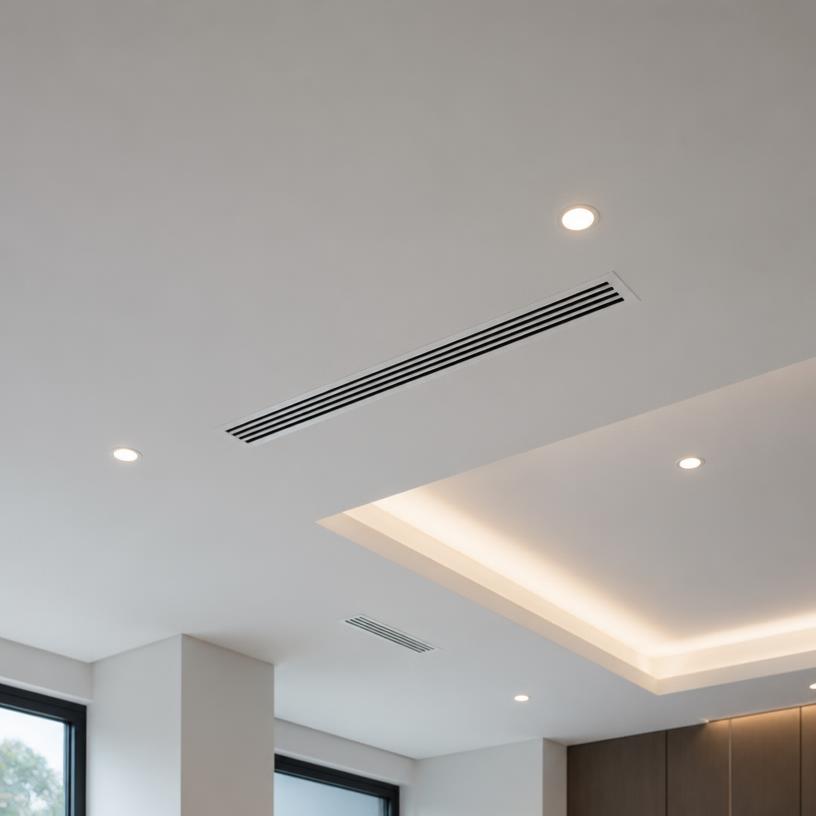
Ductwork
The supply and return network that delivers conditioned air to each room and brings it back.
Leaky or poorly insulated attic ducts are one of the biggest sources of wasted energy in an Arizona home. Sealing and insulating them pays back quickly.
Air filter
Protects the blower and coil from dust while improving the air you breathe.
Check monthly during heavy-use months and change at least every three months. A clogged filter restricts airflow and drives up energy use.
Thermostat
The control that decides when the system runs and for how long.
An ENERGY STAR certified smart thermostat can save roughly $100 a year by managing setbacks automatically instead of relying on you to remember.
Condensate drain
Carries away the water the evaporator coil pulls out of the air.
A clogged drain line is a common cause of attic water damage and of a system shutting itself off mid-summer.
Why Our Systems Work Harder
A system in Chandler runs at or near full load for months at a time. That changes what matters: peak-condition efficiency, attic duct quality, correct sizing, and staying ahead of wear instead of waiting for a July failure.
Schedule a Free InspectionAttic ducts fight the heat
Ducts running through a 140°F attic lose cooling before the air reaches the room. Sealing and insulating them is often the highest-value improvement in an Arizona home.
Run hours magnify efficiency
A small efficiency difference matters far more here than in a mild climate, because the system runs so many more hours each year.
Oversizing backfires
A too-large unit short-cycles: it hits the setpoint fast, shuts off, and leaves the house humid and unevenly cooled while wearing out the compressor.
Maintenance is not optional
Dust, dirty coils, and neglected filters compound quickly in the desert. Regular service protects both efficiency and equipment life.